
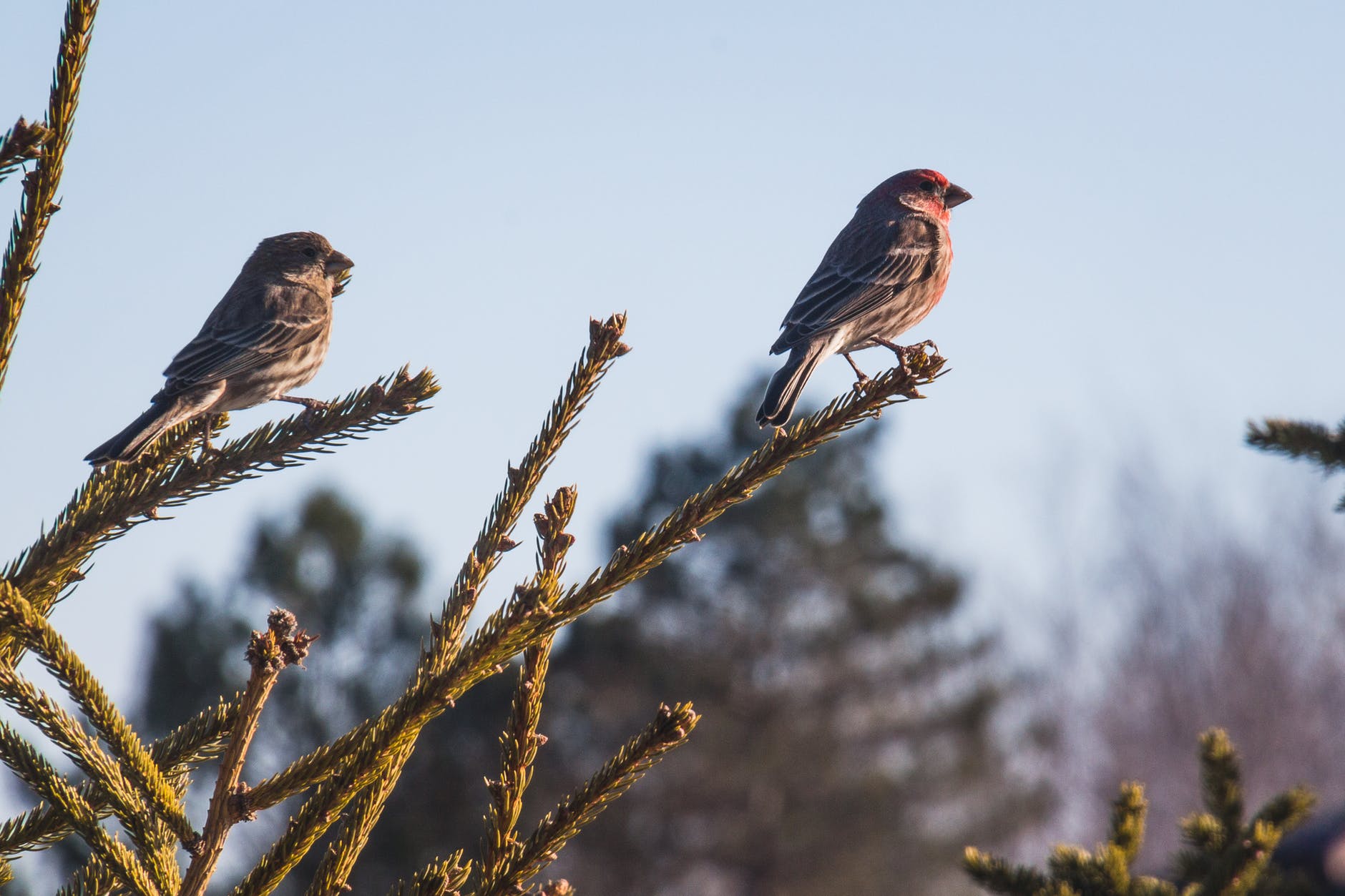
As Christians, we may mostly think of animals as objects we are to steward; however, it is clear that God cares about them.
Matthew 6:25-27 ESV
Therefore I tell you, do not be anxious about your life, what you will eat or what you will drink, nor about your body, what you will put on. Is not life more than food, and the body more than clothing? Look at the birds of the air: they neither sow nor reap nor gather into barns, and yet your heavenly Father feeds them. Are you not of more value than they?
While animals have no souls and are of less value to God than humans, they are still part of His good Creation. God feeds the sparrows, a creature that does little work on the earth. St. Francis, an Italian friar and preacher, came to this realization and included them in his ministry. This is depicted in a piece of artwork that is still hanging as an altarpiece in the Church of San Francesco of Pescia.
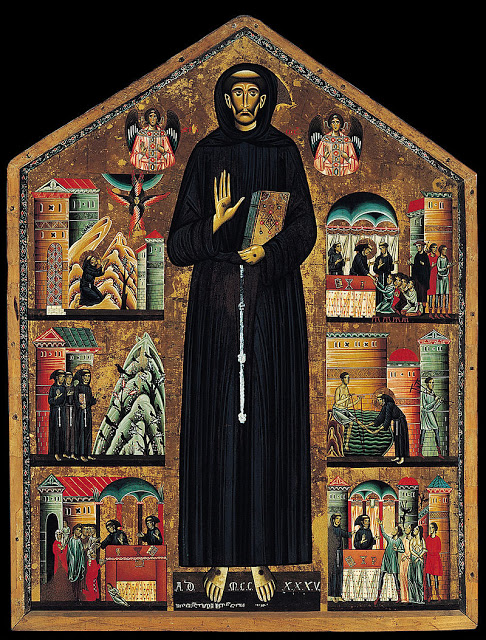
Panel from St. Francis Altarpiece, 1235
Tempera on wood by Bonaventura Berlinghieri (1210-1287)
San Francesco, Pescia, Italy
Pictured
to the left is St. Francis Altarpiece painted by Bonaventura Berlinghieri. Depicted in this painting is St. Francis of Assisi and, in the aprons of the piece, various important moments of his life. St. Francis died in 1226, became canonized as a saint in 1228, and, in 1935, Berlinghieri painted this art piece to commemorate his life. In the church, it is a life size painting five feet tall and is the focus of prayer and meditation for many people.
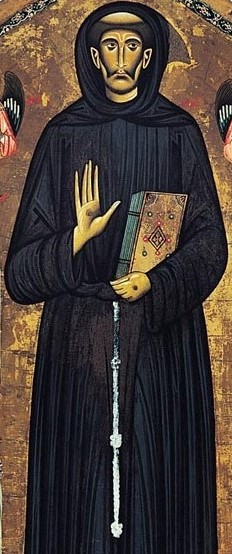
One reason this piece is studied today is for its elements that reflect Byzantine art. In the east in the early 13th century many icons like the Madonna and saints were painted with flat gold backgrounds. As this style of painting icons made its way to Italy, Berlinghieri incorporated into his painting of St. Francis. Other Byzantine influences include the elongated body, frontal view of the body, unnatural stance, and golden light around the head.
art/bonaventuraberlinghieri.htm
Sermon of St. Francis to the Birds panel from St. Francis Altarpiece
To understand the meaning of this painting, we need to take a look at St. Francis’ life. He was born into a wealthy family but after having a vision, he renounced his worldly possessions. The goal of living in poverty was to become more Christ-like. Francis created the Franciscans, a Christian religious order founded in the early 13th century, which strove to follow the ideals of poverty, chastity, and obedience.
These ideals were relatively new and were part of the transition into the Renaissance period and part of changes in the Catholic Church. Just as his followers believed, this altarpiece portrays his saintliness and the miracles associated with him. It is clear he is a person blessed by God because of the halo of light around his head that symbolizes the light of heaven. His long unshapely robe shows that he was not interested in anything of the flesh, and his simple robes displays his humbleness.
Sermon of St. Francis to the Birds from St. Francis Altarpiece
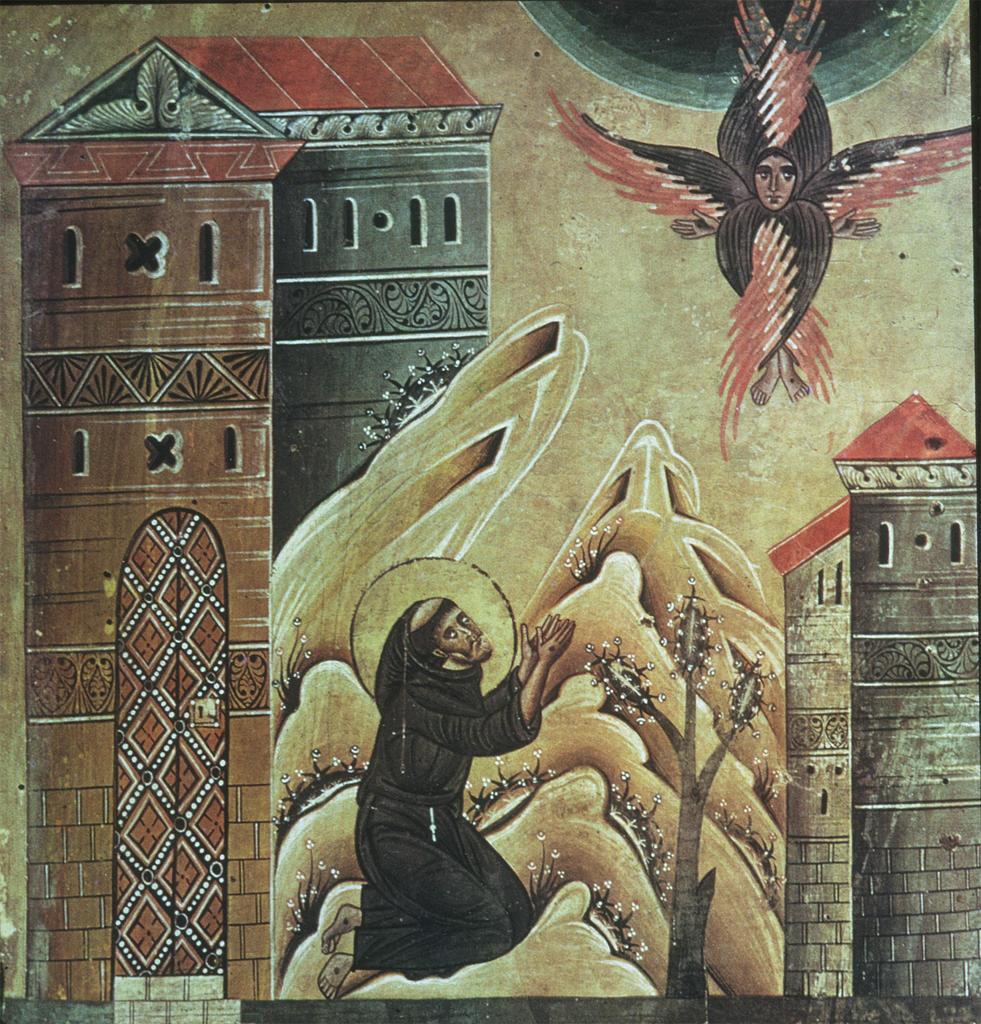
In this piece, there are six side paintings, or aprons, that depict various moments associated with Francis. In the upper left apron, we see a scene of Francis kneeling in the wilderness under a seraphim. This is a scene where St. Francis had his vision and receives his stigmata. The holes in his hands and feet (stigmata) are like the ones Christ received when he was crucified.
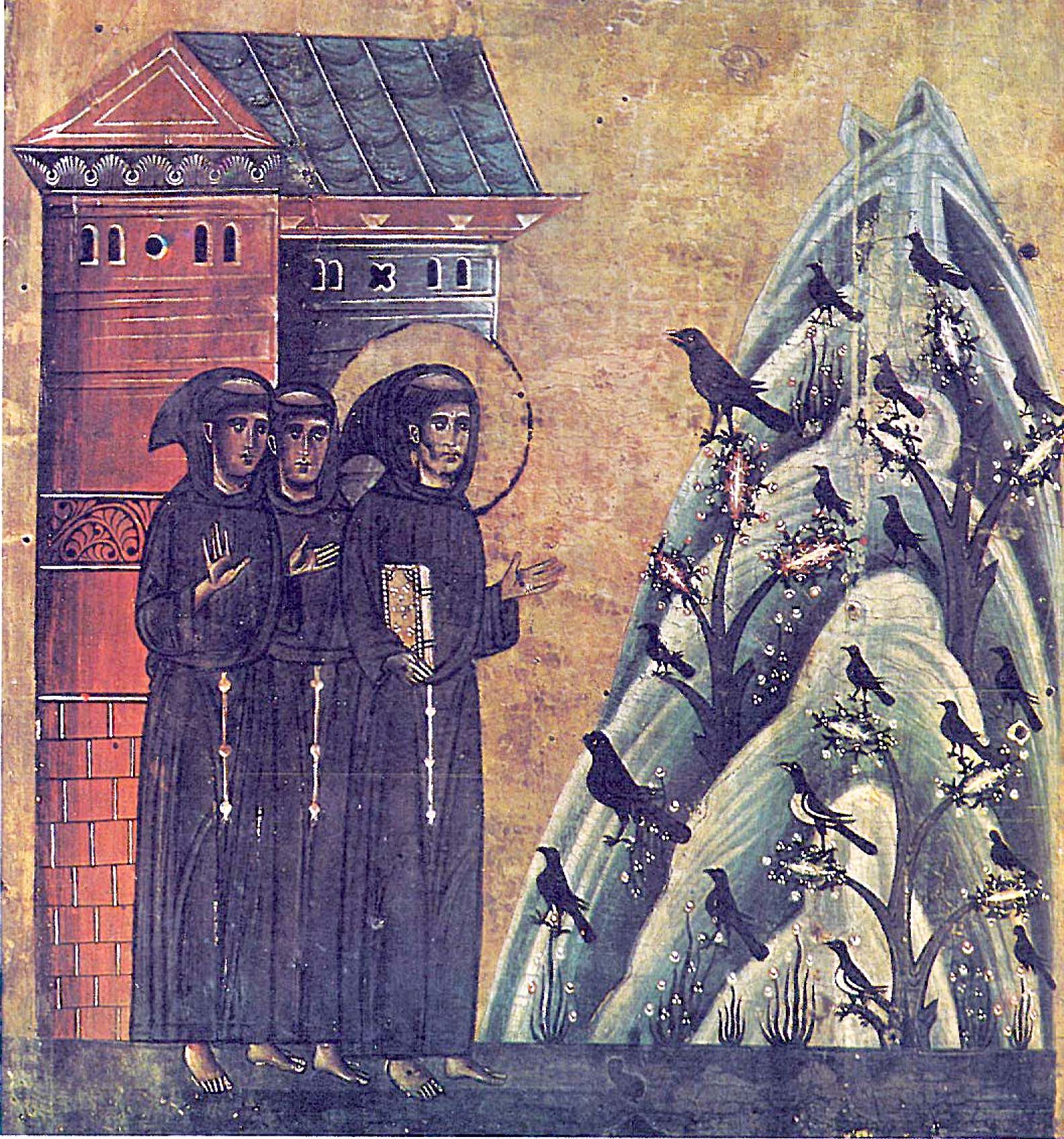
Sermon of St. Francis to the Birds from St. Francis Altarpiece
Finally, we get to the scene with the birds. You can see Francis (with the halo of light) preaching to various birds perched on trees.
In a book entitled Life of St. Francis, Saint Bonaventure wrote of this scene taking place right after a questionable time in Francis’ life. He was not sure if he should retire from the world and devote his whole life to prayer or travel to preach the Gospel. After hearing word back from two trusted colleagues, he was assured that it was God’s will for him to continue to travel and spread the Word. Immediately, he left to carry out his duty and, instead of preaching to people, he preached to the first piece of living Creation he found: a flock of birds.
In his Life of St. Francis, Bonaventure wrote:
“He went right up to them and solicitously urged them to listen to the word of God, saying, ‘Oh birds, my brothers and sisters, you have a great obligation to praise your Creator, who clothed you in feathers and gave you wings to fly with, provided you with pure air and cares for you without any worry on your part.’…The birds showed their joy in a remarkable fashion: They began to stretch their necks, extend their wings, open their beaks and gaze at him attentively.
He went through their midst with amazing fervor of spirit, brushing against them with his tunic. Yet none of them moved from the spot until the man of God made the sign of the cross and gave them permission to leave; then they all flew away together. His companions waiting on the road saw all these things. When he returned to them, that pure and simple man began to accuse himself of negligence because he had not preached to the birds before.”
Excerpt taken from:
https://www.franciscanmedia.org/saint-francis-and-the-birds/.
Although the birds had no soul, Frances yet urged them to praise their Creator. After the sermon he decided that animals, as part of Creation, should be honored and included in his evangelical mission. And from that day on it is said that he did exhort birds, reptiles, and all other animals to praise and love God.
This scene with the birds is also important to his followers because it represents how St. Francis and his order preached to the poor. Generally, the wealthier people lived in the towns, so Franciscans built cities on the outskirts of towns to reach out to the poor.
The other aprons depict other miracles associated with Francis. He is pictured healing the disabled and performing an exorcism. The miracles, the stigmata, and the humbleness of Frances identify him with Christ and the apostles. Overall, the six pictures convince the viewer of Francis’ holiness.
The picture of the birds is only a small part of the St. Francis Altarpiece, but it is a vital part that actually represents more than meets the eye. Just as God cares for the sparrows of the Earth, Francis cared for them. He reminded them who their Creator was and urged them to praise God. Along with the birds, he and his Franciscan order served the poor who were also often just as overlooked and neglected as the birds.
“Berlinghieri, St. Francis Altarpiece.” Khan Academy. Accessed March 23, 2019. https://www.khanacademy.org/humanities/medieval-world/gothic1/v/bonaventura-berlinghieri-altarpiece-of-st-francis-c-1235.
Britannica, The Editors of Encyclopaedia. “Franciscan.” Encyclopædia Britannica. August 11, 2016. Accessed March 23, 2019. https://www.britannica.com/topic/Franciscans.
Mencher, Kenney. “What’s Important about Bonaventura Berlinghieri’s Altarpiece Depicting St. Francis?” Kenney Mencher. January 01, 2017. Accessed March 23, 2019. http://www.kenneymencher.com/2017/09/whats-important-about-bonaventura.html.
Wintz, Jack. “Saint Francis and the Birds.” Franciscan Media. October 03, 2018. Accessed March 23, 2019. https://www.franciscanmedia.org/saint-francis-and-the-birds/.
 Animals of Italian Art